
TL;DR: Most asphalt shingle roofs in Ontario last approximately 15–30 years, depending on shingle quality, installation, ventilation, roof design and maintenance. Cedar shake roofs often last around 20–30 years or longer when properly installed and maintained, while metal roofing can last 40–70 years or more depending on the system. Ontario’s freeze-thaw cycles, snow, ice, wind, rain, shade and moss growth can contribute to premature deterioration. If you own a home in Toronto, Mississauga, Oakville, Burlington, Hamilton or the surrounding area, regular inspections and timely repairs can help you get the most from your roof.
Average Roof Lifespan in Ontario by Material
Not every roofing material ages at the same rate. The following table provides general planning estimates for residential roofs in Ontario. Actual service life varies with product specifications, installation quality, exposure, ventilation and maintenance.
| Roofing material | Typical planning lifespan |
|---|---|
| 3-tab asphalt shingles | 15–20 years |
| Architectural asphalt shingles | 20–30 years |
| Premium or designer asphalt shingles | 25–40 years |
| Natural cedar shakes or shingles | 20–30 years or longer |
| Natural slate | 50–100+ years |
| Clay roof tiles | 50–100+ years |
| Concrete roof tiles | 40–75 years |
| Metal roofing | 40–70+ years |
| Flat roofing membranes | Approximately 15–30 years, depending on the system |
These are broad estimates, not guarantees or manufacturer warranties. Some roofs need replacement earlier, while others remain serviceable beyond these ranges. A roof’s actual condition matters more than its age alone.
Why Ontario Weather Affects Roof Lifespan
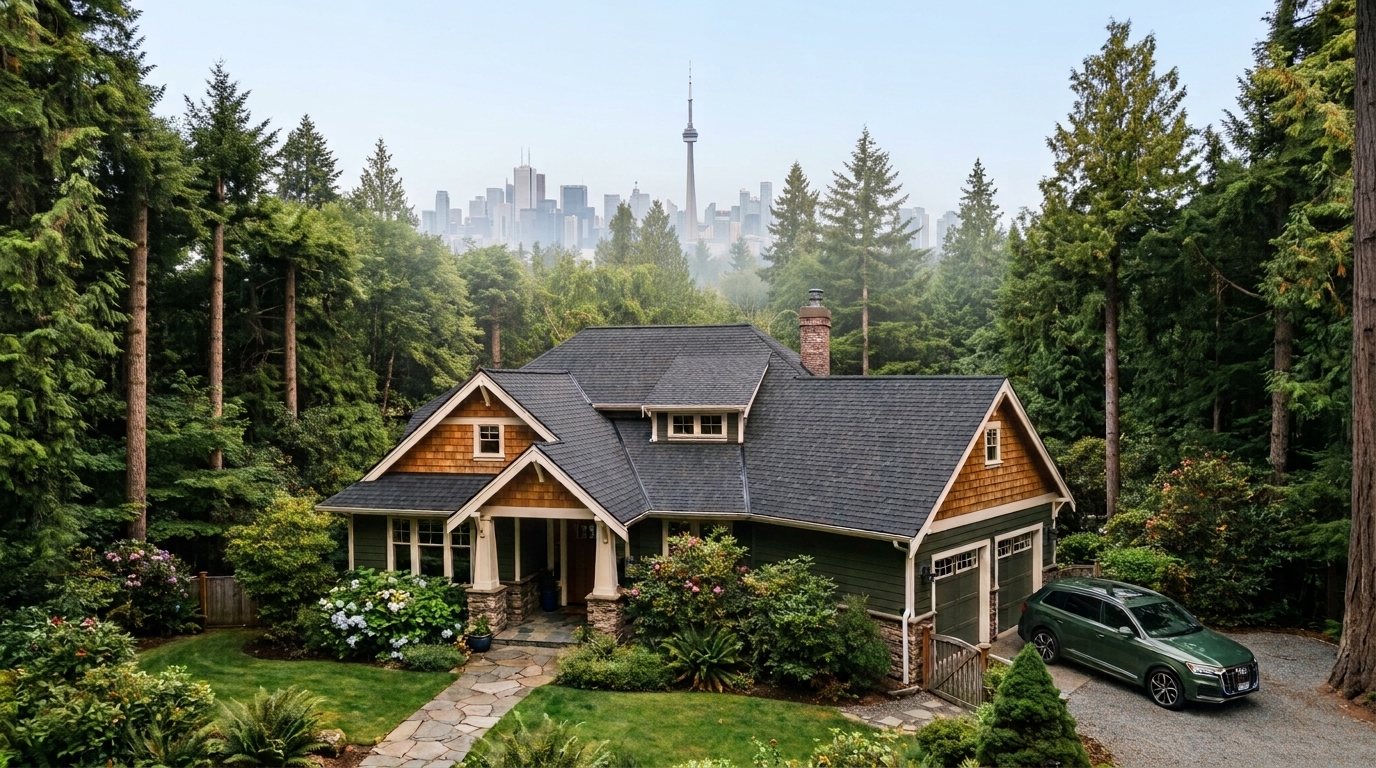
Roofing systems across Toronto, the GTA and Hamilton experience a combination of weather conditions that can accelerate wear.
1. Freeze-thaw cycles
Ontario temperatures frequently move above and below freezing during late autumn, winter and early spring. Water can enter small gaps, freeze and expand, and contribute to deterioration around vulnerable roof details.
Flashing, valleys, ridge caps and penetrations around plumbing vents and chimneys deserve particular attention because they are common areas for water entry.
2. Snow, ice and ice dams
Snow accumulation and repeated melting can create challenging conditions for roofs. When heat escapes through a poorly insulated or inadequately ventilated attic, snow may melt and refreeze near colder eaves, contributing to ice dams.
Ice dams can force water beneath roofing materials and cause interior damage. Proper attic insulation, air sealing, ventilation and roof detailing help manage the underlying risks.
3. Wind and heavy rainfall
Strong winds can lift loose shingles, damage ridge caps and expose vulnerable areas. Heavy rainfall can reveal problems with flashing, drainage or deteriorated roofing materials.
After a significant storm, look for missing shingles, displaced roofing components, damaged eavestroughs and signs of water entering the home. Avoid climbing onto the roof to investigate.
4. Moss, algae and persistent shade
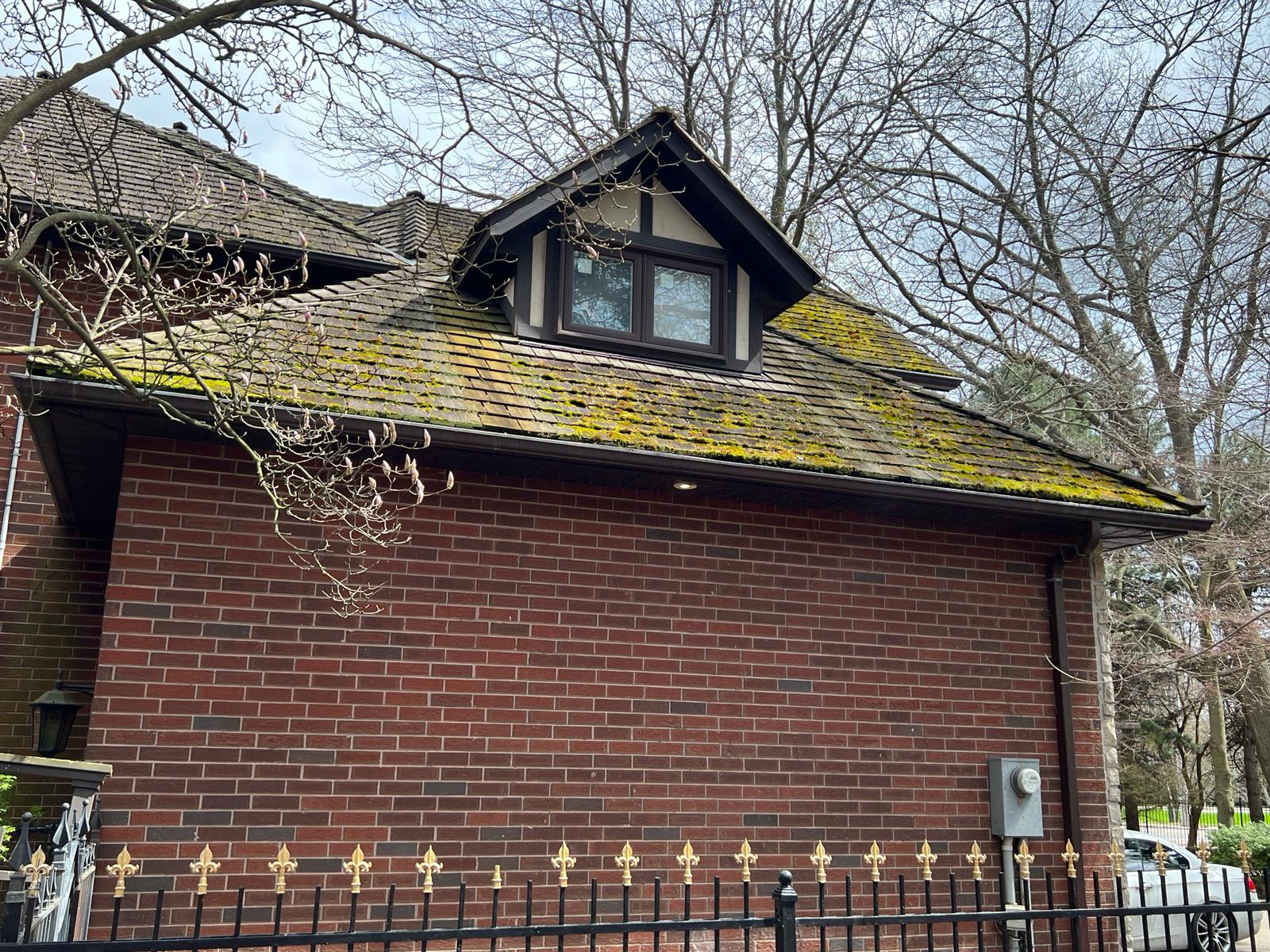
Moss is particularly relevant to homes with mature trees, shaded roof slopes and areas that remain damp after rainfall.
On asphalt shingles, established moss can retain moisture and interfere with the surface or shingle edges. On cedar roofing, persistent moisture and biological growth can contribute to deterioration, especially where the wood is already damaged or poorly ventilated.
Black streaks may be caused by algae rather than moss. The correct cleaning approach depends on the roofing material and the type of growth present.
Important: Aggressive pressure washing can damage roofing materials. Cedar, asphalt shingles, slate and tile should not automatically be cleaned using the same process.
How Long Does an Asphalt Shingle Roof Last in Ontario?
Asphalt shingles are common throughout Toronto, Hamilton and surrounding communities. Their lifespan depends on the shingle grade, installation details, attic conditions and exposure to the elements.
3-tab asphalt shingles: approximately 15–20 years
Traditional 3-tab shingles have a relatively flat, uniform appearance. They can provide reliable service, but their construction and product specifications differ from those of heavier laminated shingles.
As they age, watch for curling edges, cracking, widespread granule loss and recurring leaks.
Architectural shingles: approximately 20–30 years
Architectural, or laminated, shingles are generally thicker and have a more dimensional appearance than traditional 3-tab shingles. Many offer improved wind resistance, depending on the product and installation.
A quality architectural roof with correct installation and good attic conditions may remain serviceable for decades. However, a premium product cannot compensate for poor workmanship, inadequate ventilation or unresolved moisture problems.
Premium shingles: approximately 25–40 years
Some premium products are designed for longer service and may carry extended limited warranties. These warranty terms should not be interpreted as a guarantee that a roof will remain trouble-free for the entire stated period.
Check the specific manufacturer’s documentation, installation requirements and warranty exclusions when evaluating your roof.
How Long Does a Cedar Shake Roof Last in Ontario?
Natural cedar roofing can last for decades, but its performance depends heavily on the quality of the wood, installation, roof assembly, ventilation and maintenance.
As a broad planning estimate, a well-installed and properly maintained cedar roof may last around 20–30 years or longer. Some roofs require substantial repairs earlier, while others remain serviceable beyond this range.
What affects cedar roof lifespan?
- Wood quality: Grade, cut, thickness and the condition of individual shakes or shingles influence durability.
- Installation: Correct spacing, fastening, flashing and roof assembly details help manage moisture.
- Ventilation: Appropriate airflow and moisture management beneath the cedar roofing are important.
- Shade and debris: Overhanging branches, accumulated leaves and persistent dampness can increase maintenance needs.
- Maintenance: Timely replacement of damaged shakes, ridge caps and deteriorated details can help prevent local problems from spreading.
- Cleaning method: Unsuitable chemicals, excessive pressure or aggressive mechanical cleaning can damage cedar fibres.
Can cedar roof cleaning extend its life?
Appropriate maintenance can help preserve a cedar roof’s condition, but cleaning is not a substitute for repairing deteriorated wood or correcting moisture problems.
A professional assessment should distinguish between removable moss or debris, repairable damage and widespread deterioration. Depending on the findings, the appropriate option may be cleaning, selective repairs, restoration or complete replacement.
At The Cedar Cleaners, cedar roof maintenance should be approached with the material’s condition in mind rather than treating every roof with a one-size-fits-all cleaning method.
How Long Do Slate, Tile and Metal Roofs Last?
Natural slate roofing
Natural slate can last 50–100 years or longer when the slate, fasteners, supporting structure and installation are suitable and well maintained. Individual slates may crack or slip, and flashing or fasteners can require attention before the slate itself reaches the end of its service life.
Cleaning must be approached carefully because slate can be damaged by unsuitable methods or unnecessary foot traffic.
Clay and concrete roof tiles
Clay tiles may last 50–100 years or longer, while concrete tiles commonly have planning lifespans of approximately 40–75 years. Actual performance varies considerably by product and installation.
Tiles can crack, shift or become dislodged. Underlayment, flashing and other concealed components may need attention before the tiles themselves require replacement.
Metal roofing
Metal roofing commonly has a planning lifespan of approximately 40–70 years or more, depending on the metal, coating, panel system, installation and maintenance.
Corrosion, damaged coatings, loose fasteners and flashing failures can affect performance. A metal roof should be assessed as a complete system rather than by the visible panels alone.
How Long Does a Flat Roof Last in Ontario?
Flat and low-slope roofs use several different membrane systems, so there is no single lifespan that applies to all of them.
| Flat roofing system | General planning range |
|---|---|
| EPDM membrane | 20–30 years |
| TPO membrane | 15–25 years |
| Modified bitumen | 15–25 years |
| Built-up roofing (BUR) | 20–30 years |
These ranges are approximate. Membrane formulation, installation, seams, drainage, rooftop equipment, maintenance and exposure all influence performance.
Commercial and residential flat roofs should be checked for blocked drains, deteriorating seams, damaged flashing, standing water and signs of moisture intrusion. Ponding water or a recurring leak warrants a closer assessment rather than an assumption that the entire roof needs immediate replacement.
The Main Factors That Shorten a Roof’s Life
Regardless of material, several recurring issues can cause a roof to deteriorate earlier than expected.
Poor installation
Incorrect fastening, inadequate flashing, unsuitable materials and failure to follow manufacturer instructions can create problems from the beginning.
Inadequate attic ventilation or moisture control
Roof performance depends on more than the exterior covering. Heat loss, indoor moisture, insulation deficiencies and inadequate ventilation can contribute to condensation, ice-dam formation and deterioration of the roof deck.
Ventilation should be evaluated as part of the overall roof and attic assembly, not treated as a universal prescription for one particular vent design.
Neglected maintenance
Loose or missing roofing components, damaged flashing, accumulated debris and blocked drainage can allow small problems to develop into larger repairs.
Overhanging trees and shade
Trees can drop leaves, needles and branches onto the roof. Shade may also slow drying after rainfall, increasing the time that some roof surfaces remain damp.
Unsuitable cleaning methods
A roof can be damaged by inappropriate pressure, chemicals, tools or cleaning techniques. The safest approach depends on the material, its age, its existing condition and the manufacturer’s recommendations.
Delayed repairs
A small, repairable defect can allow water to reach insulation, decking or interior finishes if left unattended. Prompt investigation can help limit the scope of damage.
Signs Your Roof May Be Nearing the End of Its Service Life
Age is only one indicator. Homeowners should watch for a combination of visible changes and recurring problems.
- Curling, cracking, brittle or missing asphalt shingles.
- Excessive granule accumulation in eavestroughs, particularly alongside other signs of shingle deterioration.
- Split, cupped, loose or missing cedar shakes.
- Slipped or cracked slate and roof tiles.
- Corrosion, loose fasteners or damaged coatings on metal roofing.
- Repeated leaks in different locations.
- Damaged flashing around chimneys, skylights and roof penetrations.
- Persistent moss or debris that prevents roof surfaces and drainage areas from drying properly.
- Interior water stains, damp insulation or evidence of moisture in the attic.
- Sagging or other visible changes in the roof structure.
A single issue does not automatically mean the roof needs replacement. A qualified inspection can help establish whether a local repair is reasonable or whether broader deterioration is present.
Roof Repair vs. Replacement: Which Makes More Sense?
The right choice depends on the roof’s age, material, condition, repair history and the extent of the damage.
| Situation | Option to investigate |
|---|---|
| A relatively young roof with isolated flashing damage | Targeted repair |
| A few damaged cedar shakes on an otherwise serviceable roof | Selective shake replacement |
| Localized moss or staining without significant material deterioration | Material-appropriate cleaning and maintenance |
| Widespread shingle deterioration and recurring leaks | Repair assessment and replacement comparison |
| Extensive cedar deterioration across multiple slopes | Restoration suitability assessment or replacement |
| A flat roof with recurring leaks or suspected trapped moisture | Professional condition assessment |
Repeated repairs can become expensive when a roofing system is deteriorating across a large area. However, replacement should not be recommended solely because a roof has reached a particular birthday.
Ask for a written scope that explains the observed problems, the proposed work, any limitations and whether additional concealed damage may be discovered during repairs.
How to Get More Years from Your Roof in Toronto and Hamilton
Homeowners throughout the GTA and Hamilton area can take practical steps to manage roof condition and reduce avoidable deterioration.
- Arrange periodic inspections. Check the roof after significant storms and obtain a professional assessment when you notice damage or recurring leaks.
- Keep drainage areas clear. Maintain eavestroughs, downspouts and flat-roof drains so water can flow away properly.
- Manage nearby trees. Remove accumulated debris and arrange appropriate tree maintenance where branches threaten the roof.
- Address moss appropriately. Identify the roofing material and select a compatible removal method instead of using aggressive pressure washing.
- Repair small defects promptly. Investigate loose shingles, damaged flashing and deteriorated cedar components before water intrusion becomes extensive.
- Check attic conditions. Have insulation, air sealing, ventilation and moisture concerns assessed where appropriate.
- Keep maintenance records. Record inspection dates, repairs, cleaning work, product information and photographs to help monitor changes over time.
Homeowners should not climb onto steep, icy, wet or otherwise unsafe roofs. Roof inspections and repairs may require specialised access and fall-protection equipment.
Roof Lifespan in Toronto, Oakville, Burlington and Hamilton
The general lifespan ranges in this guide apply as starting points across the Greater Toronto and Hamilton Area, but individual properties can experience different conditions.
- Toronto and North York: Mature trees, shaded slopes, roof complexity and building design can influence maintenance requirements.
- Mississauga and Etobicoke: Exposure to wind, rain, debris and the condition of the attic and roof assembly can affect performance.
- Oakville and Burlington: Roof orientation, nearby trees, moisture exposure and installation quality all matter.
- Hamilton and Stoney Creek: Local exposure, roof design, drainage and seasonal temperature changes should be considered during inspection and maintenance planning.
- Halton and Niagara communities: The same material-specific principles apply, with recommendations tailored to the property’s exposure and roof condition.
Rather than relying on a city-specific lifespan figure, evaluate the roofing material, installation history, visible condition and moisture-management details of the individual home.
Frequently Asked Questions
How many years should a roof last in Ontario?
As a general guide, asphalt shingle roofs often last 15–30 years, cedar roofs around 20–30 years or longer, metal roofs around 40–70 years or more, and natural slate or some tile roofs can last 50–100 years or longer. Actual service life depends on the product, installation, exposure and maintenance.
Should I replace my roof after 20 years?
Not necessarily. Some asphalt shingle roofs may be nearing the end of their useful service life at 20 years, while others may remain serviceable. An inspection should assess shingle condition, flashing, ventilation, moisture and the extent of any damage before deciding.
Does moss shorten a roof’s lifespan?
Moss can retain moisture and interfere with roofing materials, particularly when growth is established or maintenance is neglected. Its effects depend on the material and roof condition. Appropriate removal and measures to reduce persistent dampness may help, but moss removal cannot reverse existing deterioration.
Is pressure washing safe for roof cleaning?
Not universally. Excessive pressure can damage asphalt shingles, cedar, slate and tile. Cleaning methods should be selected for the roofing material and its condition, with manufacturer guidance and runoff management taken into account.
How often should a roof be inspected in Ontario?
A practical approach is to arrange periodic inspections, commonly annually or as recommended for the particular roofing system, and after significant storms when damage is suspected. Older roofs, complex roofs and roofs with a history of leaks may need more frequent attention.
Can roof cleaning extend the life of a cedar roof?
Appropriate cleaning can remove unwanted growth and debris, helping with maintenance, but it cannot repair split shakes, failed flashing or widespread wood deterioration. Cleaning should be part of a broader maintenance plan.
Is it cheaper to repair or replace an old roof?
A targeted repair may be the more economical choice when damage is isolated and the rest of the roof remains in good condition. If deterioration is widespread and repairs are recurring, comparing the cost and scope of replacement may be worthwhile. Obtain a written assessment rather than relying on age alone.
Does a manufacturer’s 30-year or lifetime warranty mean the roof will last that long?
No. Warranty terms describe specified coverage and conditions, not a guaranteed service life. Coverage can depend on installation, product requirements, exclusions and other terms. Review the actual warranty documents for the roofing product.
Protect Your Roof with The Cedar Cleaners
Whether you have cedar shakes, asphalt shingles, slate or tile, understanding your roof’s condition is the first step toward choosing the right maintenance option.
The Cedar Cleaners provides roof cleaning and maintenance services for homeowners across Toronto, the GTA, Hamilton and surrounding communities. Depending on the roofing material and its condition, appropriate work may include moss removal, cleaning, maintenance and assessment of repair or restoration needs.
If your roof has visible moss, accumulated debris or signs of deterioration, arrange an assessment to understand which options are suitable for your property.
Moss Removal Get Your Free Estimate
The lifespan figures in this article are general planning estimates, not guarantees. A roof-specific recommendation requires consideration of the actual material, installation, condition and applicable manufacturer guidance.